
Tuolumne County Multi-Day Arrest Log
TCSO posts no separate weekly blotter. There is no 72-hour list either. The real multi-day resource is the official Citizen RIMS arrest route, which carries older pages and real date depth. Arrest entries stay visible for a configured 30-day window. Some may be held back for other reasons. The generic bulletin route will not serve as an archive, since the office keeps no historical bulletins there.
This wider view answers a different question than today's bookings. An entry added after a weekend still shows up here. So does a record transmitted days after the arrest, or a card missed during a short outage. Page through several dates and result screens. The first view is never a complete week. And an older card does not mean the person is still in custody at J.H. Dambacher Detention Facility.
Read the Tuolumne Arrest Blotter
Treat every card as a single arrest-system entry. Begin with the date. Then use the case keys to connect it to later sources. A name match alone can hitch the wrong person to a case, but the arresting agency, incident number, and charge wording make the review far safer.
- Open Citizen RIMS and read the warning about delayed, sensitive, and omitted records.
- Move past the newest cards and work backward through the needed dates.
- Record the name, arrest time, incident number, case number, and charge description.
- Compare nearby dates when an event occurred on a weekend or holiday.
- Use the case number with TCSO records or Superior Court rather than treating the charge as the outcome.
Need the newest bookings instead? The Tuolumne County 24 Hour Arrests page tracks fresh entries. This log takes the longer view. It spans several days and reaches past the first result screen.
Tuolumne Arrest Log Fields
The public display shows arrest names, occupation, incident and case numbers, and charge descriptions. Booking photos stay off. The incarcerated-people view is turned off too. Other personal and physical-description fields do not appear, so keep what is displayed apart from what the page cannot prove.
| Log field | How to read it |
|---|---|
| Name | The name attached to the entry; check it against case details. |
| Arrest date and time | The event timestamp, not proof of the public posting time. |
| Incident number | An agency reference useful for seeking the incident record. |
| Case number | A key for agency and court follow-up. |
| Charge description | The charge entered at arrest, not a court disposition. |
| Occupation | A field enabled in the public portal. |
| Photo or release | Not shown in the observed arrest-card setup. |
Behind the display sits a fuller booking file. TCSO policy cross-references photographs and fingerprints to a unique booking number. It also ties in admission and custody records. Ask TCSO for a releasable record instead of trusting an unofficial image.
The official multi-day source is the interface readers page through to compare dates.
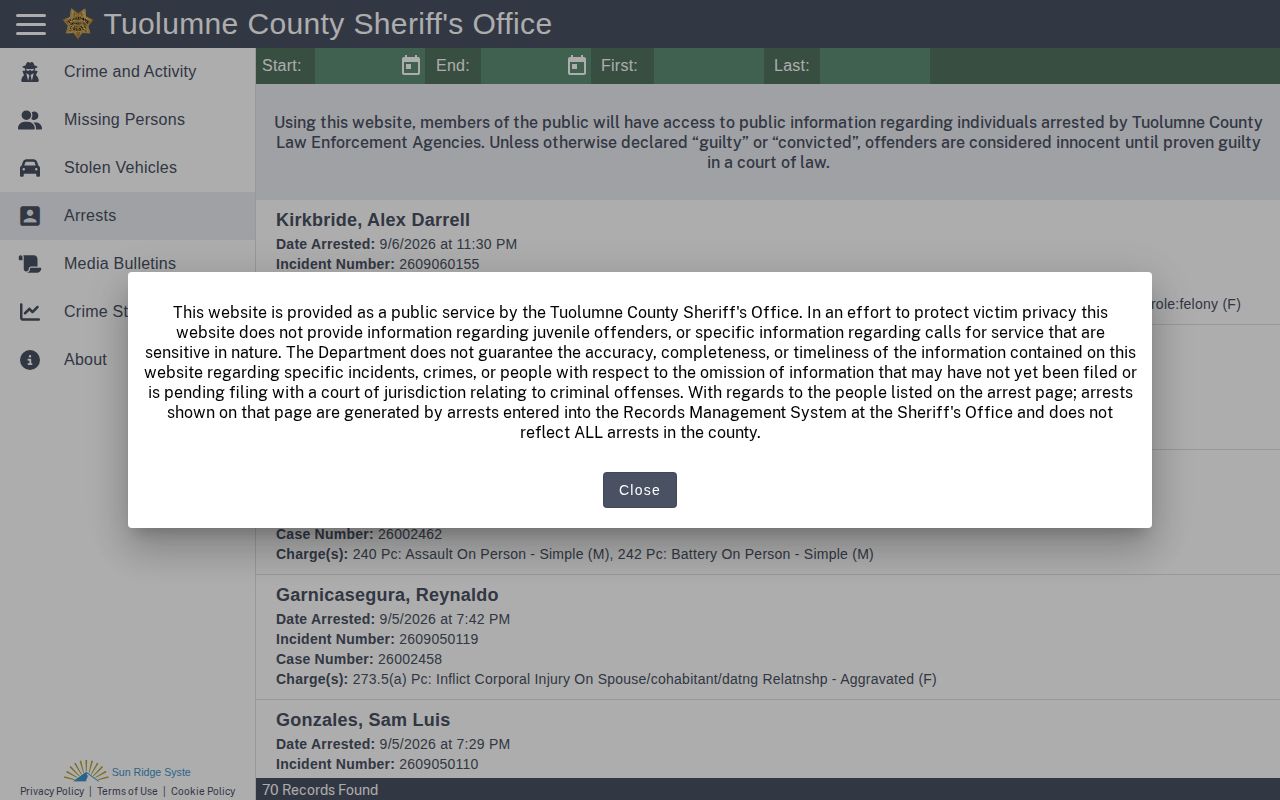
The fields describe an arrest record, not a live jail roster. A visible entry proves little. Custody status is not shown here. For that, check with the Tuolumne County jail directly.
Tuolumne Weekend Arrest Posting
A booking reaches the public system only after intake, medical screening, paperwork review, and data entry. Local agencies may also transmit records after the fact. The office publishes no weekend timetable. So check dates on both sides of an event. A quiet screen does not mean nobody was arrested. Juvenile and sensitive matters get omitted. Bookings can run incomplete, and an entry may never reach the public extract at all.
Tuolumne Arrest Log Archives
The 30-day age-out governs display, not destruction. TCSO policy describes a broader file holding admission data, photographs, fingerprints, confinement details, and court appearances. The office sets no single destruction date for every booking record or photo.
Once an arrest ages out, call TCSO records at (209) 533-5855 during published weekday hours, Monday through Friday, 9:00 a.m. to 4:00 p.m. A narrow California Public Records Act request should name the person, the date range, the arresting agency, and the case or incident number. Request the arrest entry and any releasable photo. For filings, dismissals, pleas, judgments, or sentences, use the court file.
Older material follows a separate route. The Tuolumne County Archive holds Sheriff, Coroner, Jail, and court records, and its finding aid lists jail registers from 1856 through 1964. Those serve historical research, not a modern feed.
Tuolumne Arrest News Patterns
Local reporting adds agency statements and case context the raw log lacks. myMotherLode runs Crime & Court News plus Local Law Enforcement News. The Pine Tree sometimes republishes Sheriff activity logs. These outlets pick which events to cover. They do not reproduce every booking. An image may come from the story itself, not from RIMS.
The myMotherLode Crime & Court section offers dated reporting worth checking after the official records.
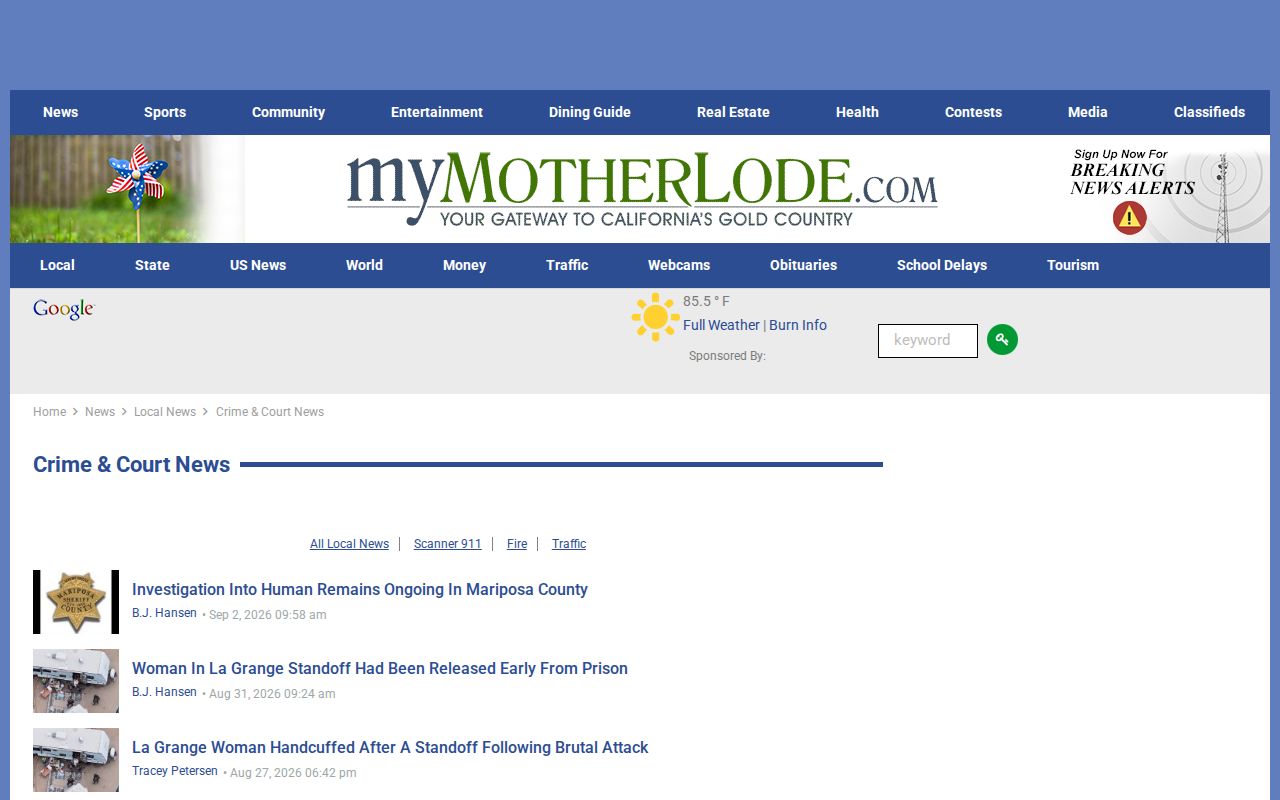
Take the story date, agency, and case facts. Then locate the official entry and confirm how the case resolved. The Union Democrat covers local matters too, though it carries no dedicated arrest-log section. News archives can outlast RIMS. Even so, they are selective and may miss a later dismissal or amended charge.
Tuolumne Arrest Trends Need Context
Numbers need framing. A 2024 Grand Jury report reproduced a March 2024 TCSO graphic showing 130 patrol arrests and 307 jail bookings. Those counts measure different things. Patrol arrests reflect one enforcement activity, while jail bookings can include people brought in by several agencies. Neither number matches anyone in the current log. A historical opioid report lists annual drug-possession arrest counts through 2022. It cannot be merged with a current RIMS scan to claim a trend. Always state the year, source, and measure.
Arrest Logs Are Not Verdicts
Names need careful matching. Check the arrest date and the incident or case number. That habit matters most after a weekend, when delayed cards post together. One person can also carry more than one charge. Similar names, street labels, or news descriptions are not enough on their own, so rely on the numbers before drawing any link.
The log also fails as a crime-rate measure. Its public window can omit juvenile, sensitive, incomplete, or unfiled material. TCSO expressly disclaims completeness and timeliness. A visible cluster may just reflect entry timing rather than more arrests. For trend analysis, dated agency statistics with stated definitions are the sound source.
For older Tuolumne County cases, keep the source date attached. Separate the arrest from what happened later. A dismissal, amended charge, acquittal, or sentence belongs in the account only when an official court record supplies it. The Superior Court record controls. An arrest card or news archive does not.
Archive research needs a careful chain of sources. Start with the current RIMS date range, preserve the incident or case number, and ask the Sheriff for the agency record when the card has aged out. Next, use the Superior Court for the legal result. The Criminal Division accepts record-search requests in person or by mail and publishes a form for name and date-range searches. Its index coverage varies by case type and year, so an older event may require a narrower request. A court search can carry fees and should be checked against the current official form before submission.
Historical jail registers serve a different purpose. The county finding aid says they record people received and discharged, along with dates, alleged offense, case data, sentence, judge, and reason for release. They do not function as a current arrest log. Researchers should give the archive a name, approximate date, and collection title, then follow research-room rules. This layered route prevents an expired public card from being mistaken for a missing record.
Disposition must remain central when reviewing old entries. The charge listed on the arrest date may change at arraignment or later. A news article may never receive that update. Match the arrest date and case number to the court file, and describe the result only when the official record supports it. Every named person remains presumed innocent unless a court proves guilt. A release date also does not show why custody ended. Court minutes and orders provide the sound source for that fact.
Public Record Search
Sponsored Results